

At the beginning of this sugar season, the government and the industry prepared for a surplus
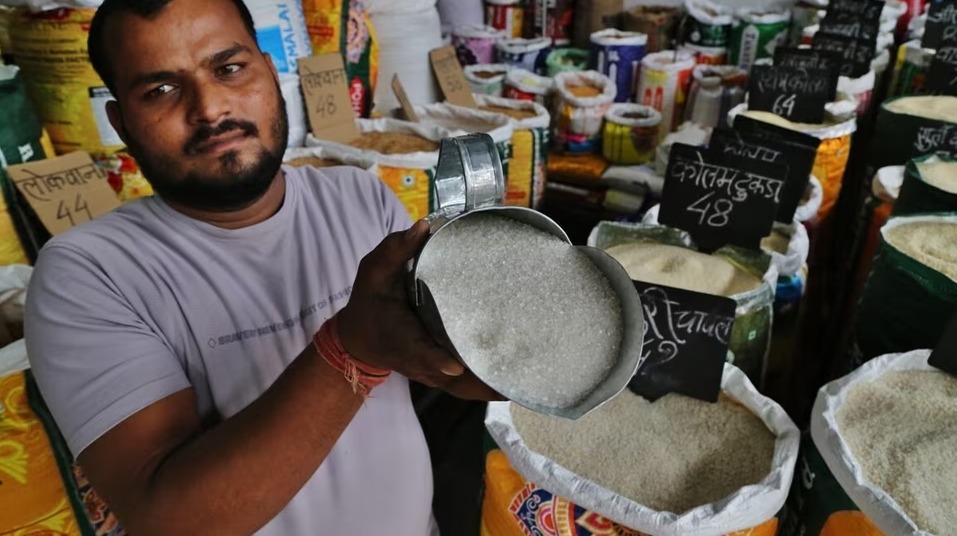
Buying a packet of sugar in any of the major metros today will set you back by roughly 40% more than a fortnight ago. The reason: A severe supply crunch. This has prompted the government to fortify sugar stores at the onset of the festive season which traditionally begins with Onam and Rakshabandhan in August.India went from a possible glut, to a serious dearth of sugar in a year.
At the beginning of this sugar season (October 1, 2025; it ends on September 30, 2026), the government and the industry prepared for a surplus. Sugar production was expected to rise sharply, diversion to produce ethanol was expected to be lower, and mills were pressing for permission to export more sugar to prevent stocks and dues to cane farmers from piling up.
Industry body Indian Sugar and Bio-energy Manufacturers Association (ISMA), expected sugar output at 34.90 million tonnes (MT) in its first preliminary estimate released in July 2025 for the 2025-26 season. This represented a 18.3% year-on-year increase from 29.6 MT the year before. This was reiterated at its annual conference in SeptembeBased on the estimate, the government allowed the industry to export sugar earlier in the season. This was starkly different from the year before. In the 2024-25 season, the government had allowed 1 million tonnes of exports only in January 2025, whereas for the current season it approved an initial 1.5 million tonnes in November 2025, soon after the season began . It allowed export of another 500,000 tonnes in February.But by May, projections changed and the policy took a U-turn.
The government in May banned sugar exports until September 30, citing the need to preserve domestic supplies. By July, it was tightening controls on mills and dealers, and in August it kept the monthly sales quota at 2.25 million tonnes — unchanged from a year earlier — even though the market expected 2.30-2.40 MT because the festival season was approaching.
Sugar prices responded sharply.
Ex-mill prices in Maharashtra and Uttar Pradesh which had been rising since late June, touched ₹4,880-4,980 per 100kg in the first week of August. Prices then touched a record ₹5,350 per 100kg, August 18. A day later, ex-mill prices of sugar in Uttar Pradesh were ₹5,850 , up from ₹4,830 per 100kg a week ago.Reacting to the sudden, steep rise, the government, late on August 19 further tightened sugar stockholding limits, restricting large industrial buyers from holding more than 15 days of their requirement from September. It then went on to open imports of sugar for the first time in nearly a decade, scrapping the 100% import tariff, and allowing 1 MT of sugar imports on August 20. That day, prices shot up to as high as ₹7,100 per 100kg in mills in Karnataka.
What happened? “How is it that a market that was expected to have enough sugar to permit exports and divert for ethanol, moved so quickly towards a situation where the government is even worried about releasing a higher quota?,” a trader with an international commodities firm asked, requesting anonymity.
How surplus turned to deficit
The sugar year’s timeline tells the story.
ISMA cut its gross sugar production estimate slightly in November, to 34.35 MT.
Of this, about 3.4 MT was expected to be diverted for ethanol production, leaving net sugar production of 31 MT for food use. With opening stocks of about 5 MT, total sugar availability was projected at nearly 36 MT, against domestic consumption of about 28.5 MT, leaving a comfortable surplus that ISMA said could support exports of at least 2 MT.However, production estimates kept weakening.
In February, ISMA cut its gross production estimate to 32.4 MT. This reduction is equivalent to a month of the country’s total sugar consumption. The industry body also reduced its estimate of net sugar production (the gross less the diversion) to 29.3MT and expected about 3.1MT of sugar equivalent to be diverted towards ethanol.
In April, the gross production estimate was cut again to 32MT.
The government now projects output for the ongoing season at 30.6MT. With 2.9MT diverted for ethanol and 800,000 tonnes exported, the leftover balance for the country stands at 26.9 MT, below the consumption estimate of 28.5 MT. However, buffer stocks from last year will boost availability till end of season.
